Choosing a finish: oak, walnut, and living with grain.
White Oak, Warm Walnut, Dark Walnut, Smoke Oak — how to read a sample and choose a finish you will still love in ten years.
A finish is the longest conversation you will have with your kitchen. Counters are replaced, walls are repainted, hardware can change with the years, but the faces of your cabinets are the room itself. Choose them the way you would choose the timber for a piece of furniture you intend to keep for decades, because that is precisely what they are.
So before the drawings, before the layouts, we always come back to one question: what should this room feel like at seven in the morning? The answer is almost always a colour of light, and the finish is what delivers it.
Begin with light, not with samples
Every showroom sample is lit like a museum, and every kitchen lives like a home. In the Bay Area the light is generous and low, sliding across counters from late afternoon onward. A finish does not have one colour. It has one for eight in the morning, one for noon, and a third for dinner under lamplight. A pale oak that reads as calm in a showroom can go flat in a north-facing room; a walnut that seems heavy on a small card becomes deep and quiet across a full run of cabinetry. The sample is a suggestion. The room is the truth.
Reading the four
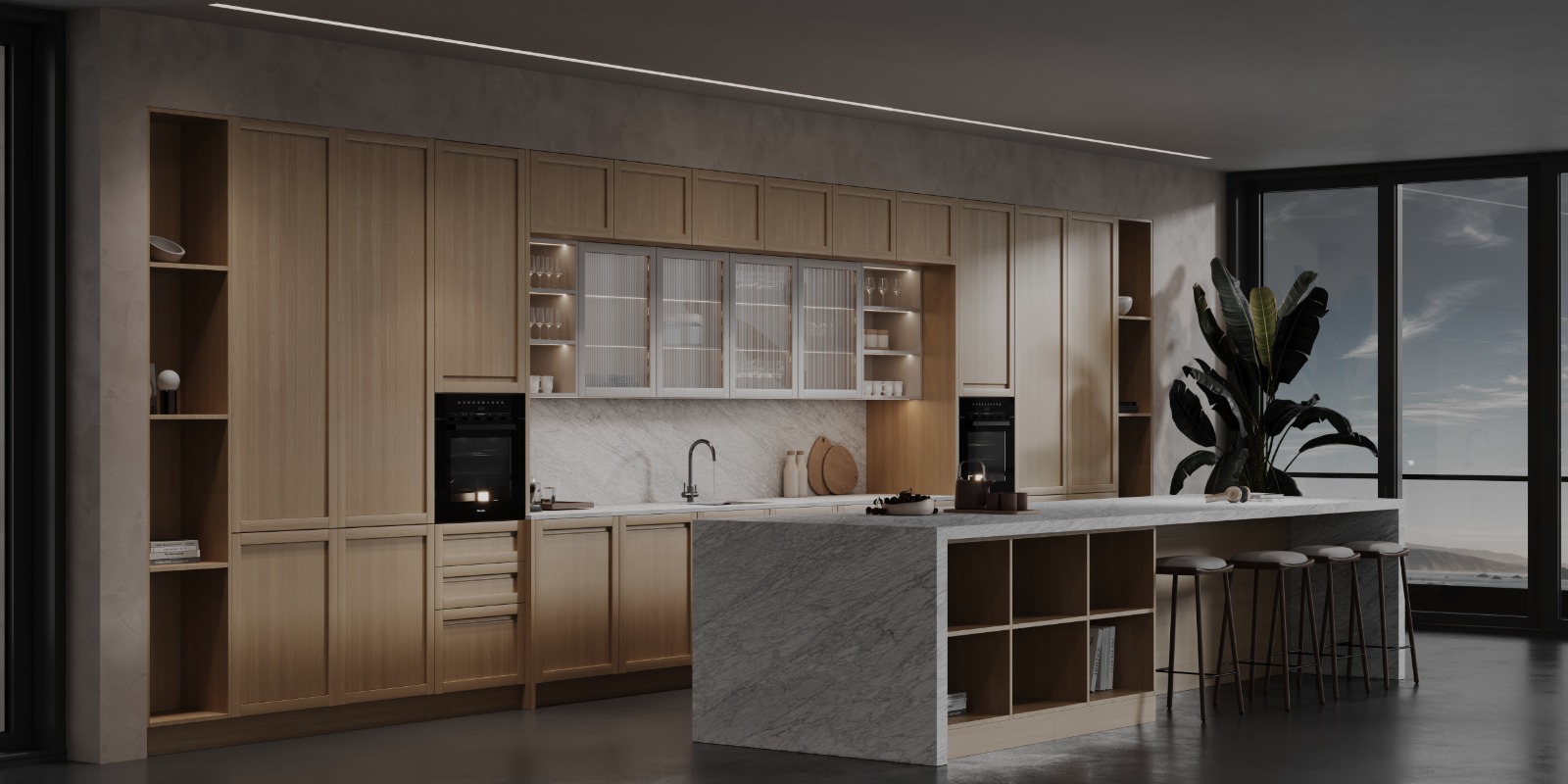
White Oak is the quiet one. Pale, with an open, honest grain, it calms bright rooms and holds a line without demanding attention. It takes grey and honey tones beautifully, which is why it sits so easily beside stone and plaster.
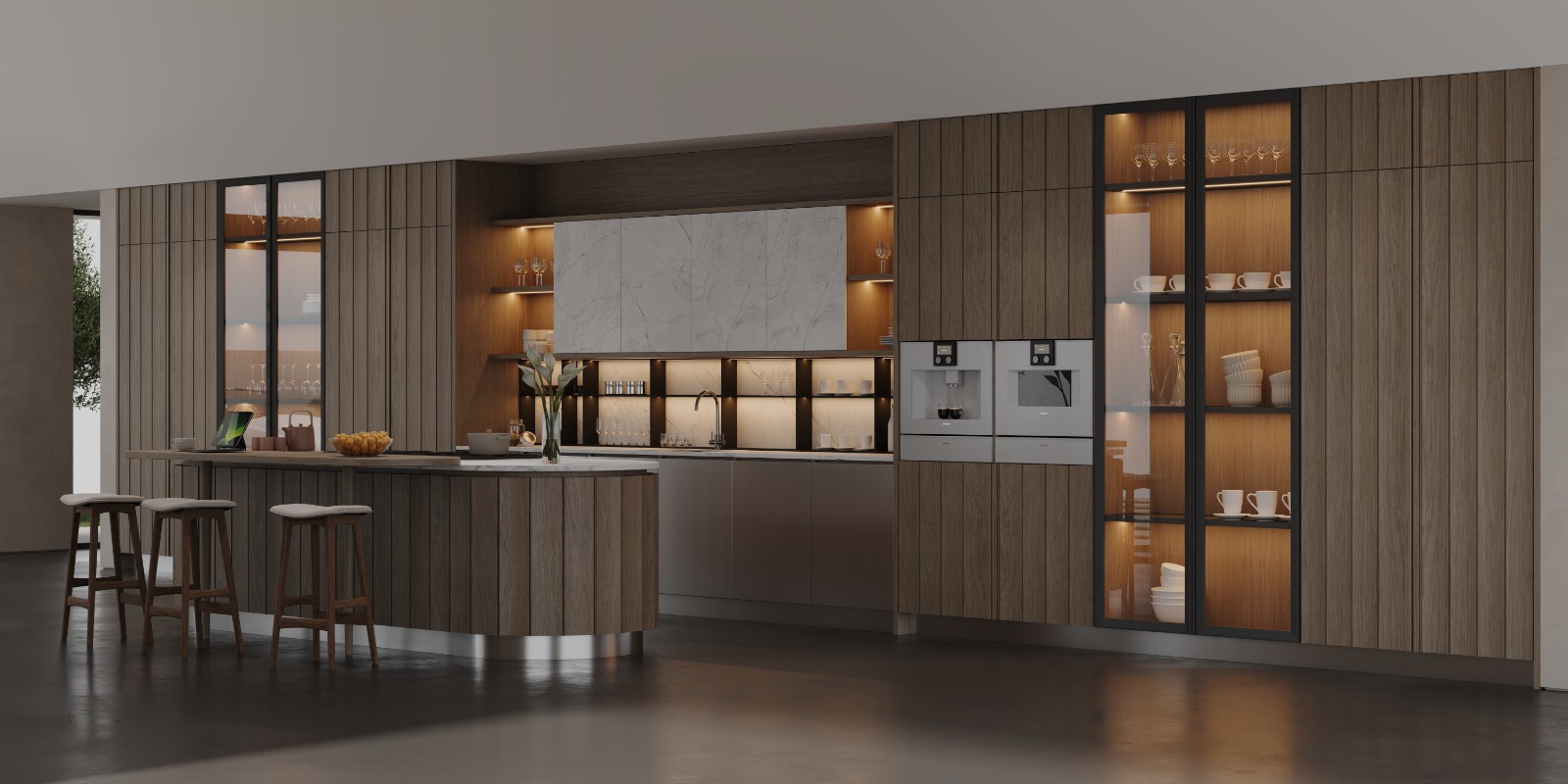
Warm Walnut is depth without weight. A mid-brown with a chocolate undertone, it flatters both brass and black, and it is forgiving in the evening, when kitchens are used most.
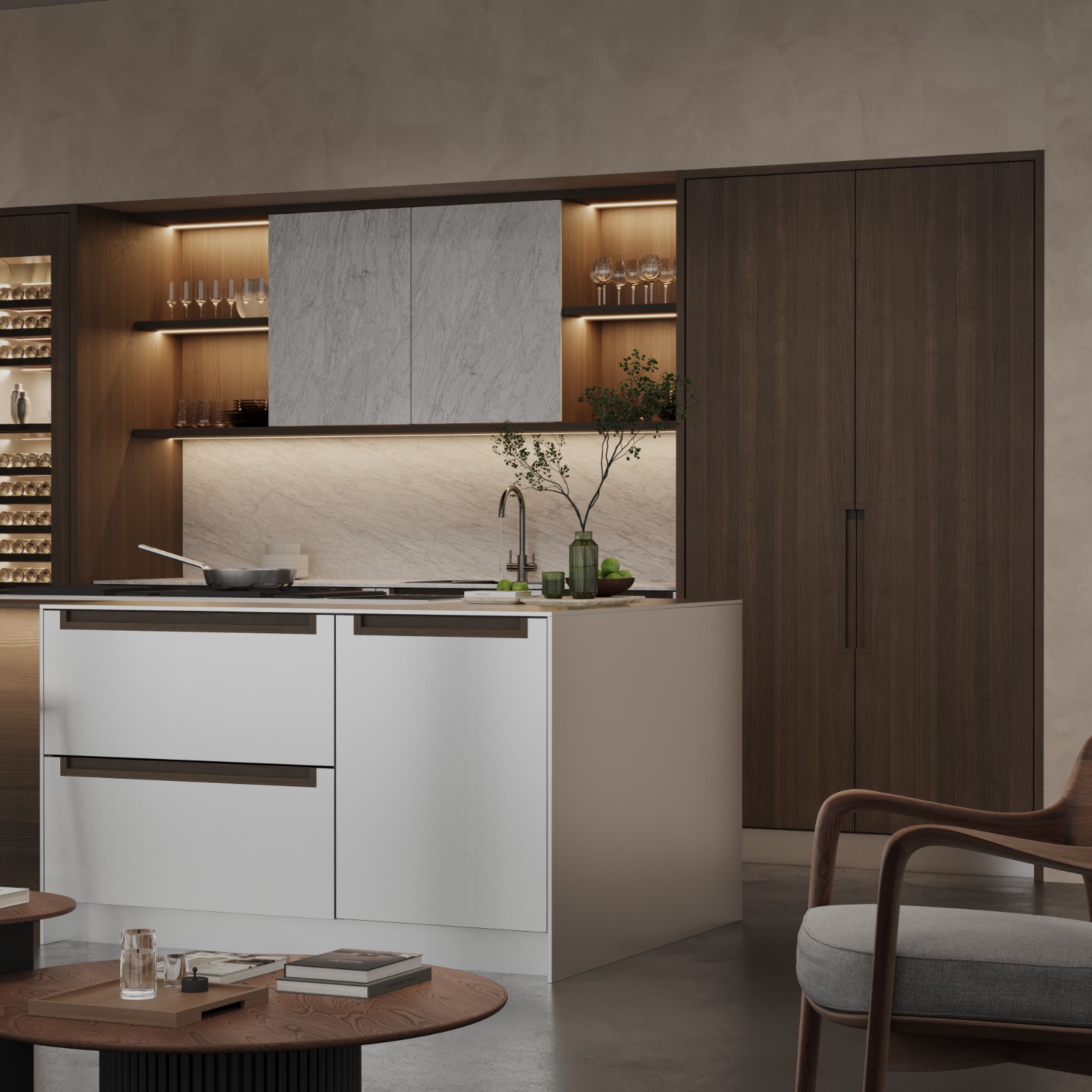
Dark Walnut is the formal voice of the four. In a generous room, with light counters and low-slung hardware, it reads as tailoring rather than darkness.
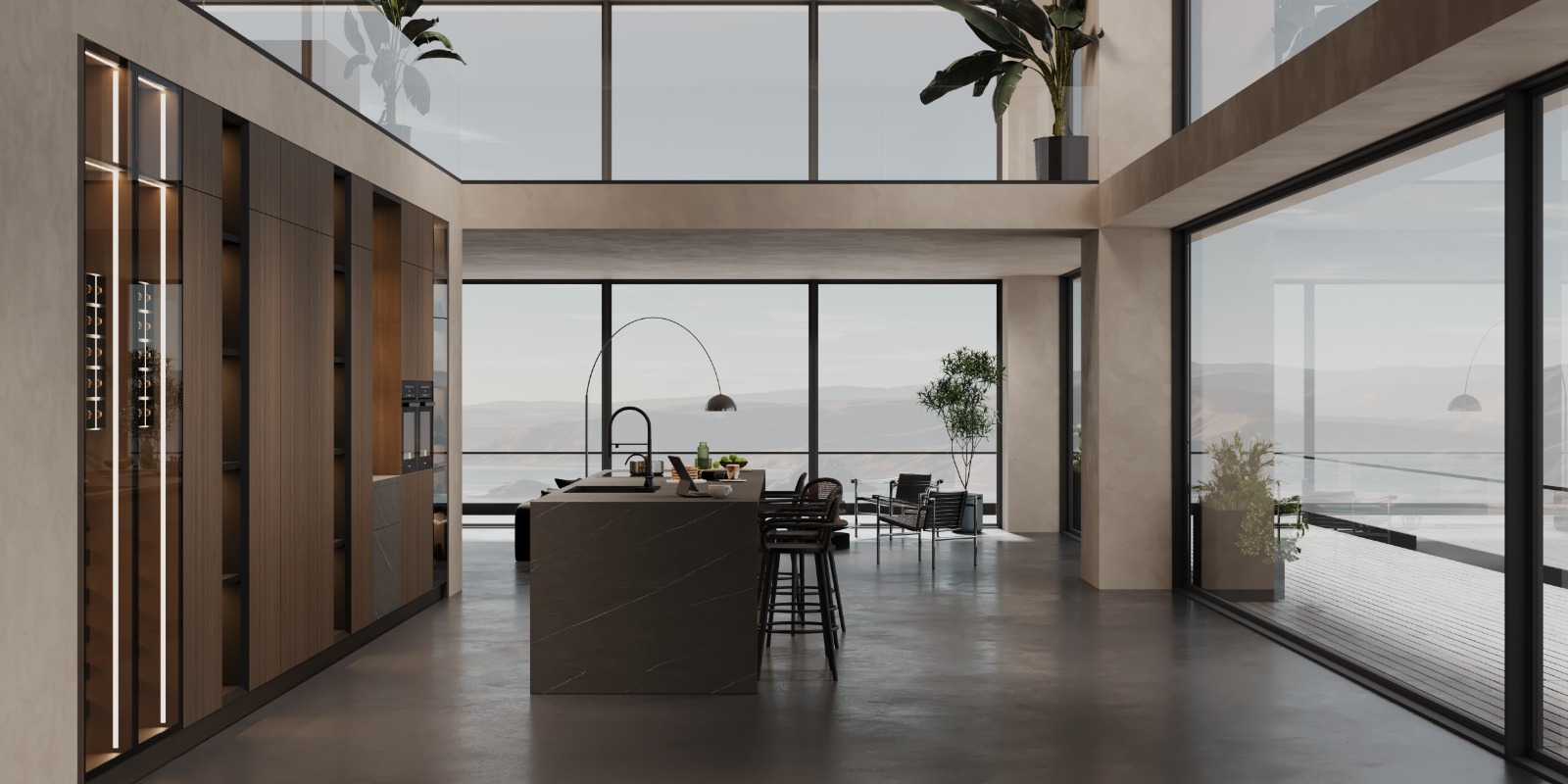
Smoke Oak is the most modern of them. Fumed and greyed, with the grain still present, it grounds a white kitchen and gives a matte, architectural shadow line to handleless fronts.
A finish should not match your furniture. It should match your mornings.
The test that matters
Take the largest sample you can and live with it for a week. Prop it where the cabinetry will actually stand. Look at it at the hour you cook, not the hour you shop. Wood is the only material in the kitchen that changes with you, deepening a shade or two over its first years as it meets the light. That is patina, not wear, and it is the reason natural veneer outlives any trend painted over it.
Between two finishes
When a client is torn, we ask them to ignore the samples and describe the morning. If they say bright and open, we are usually heading toward oak. If they say soft and warm, walnut. And if they pause before answering, the answer is often Smoke Oak, the finish that quietly refuses to choose.